
We are passionate about reducing waste in commercial interiors, and we love supporting like-minded companies!
Check out our curated list of organisations that share our commitment to the circular economy, offering services that promote material reuse and minimise waste.
Detac Systems are raised access floor restoration specialists using solvent-free methods to remove adhesive and tackifier on commercial fit-outs across London and the South East.
Here’s what they had to say about preventing adhesive build-up on cleaned floors.

Why raised access floor refurbishment often starts with adhesive removal
Raised access floors are designed to provide long-term flexibility, allowing floor panels to be lifted and replaced to provide access to services beneath.
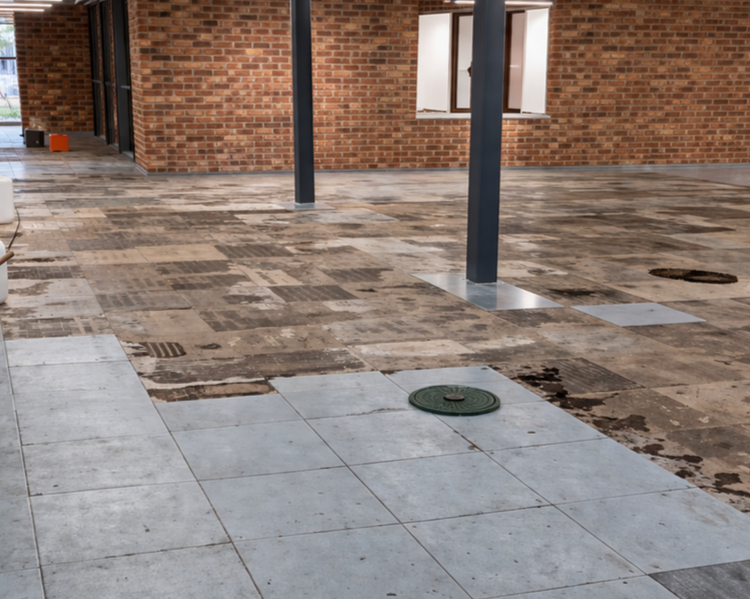
But over the life of a building, repeated flooring changes can leave a very different legacy: layers of adhesive, tackifier and other surface contamination including plywood base layers and preparation materials.
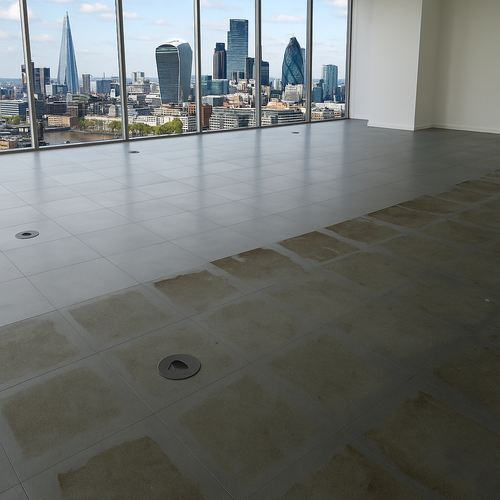
As raised access floor restoration specialists, we regularly refurbish access floors that have accumulated adhesive residue from decades of previous flooring installations.
In fact, we estimate that more than 95% of the raised access floors we have refurbished have required adhesive residue removal before they could be reused.
That means raised access floor cleaning and adhesive removal can become an unavoidable part of refurbishment – particularly where carpet tiles or other floor coverings have previously been installed using adhesive or tackifier.
Our 6-Step Restoration Process removes adhesive contamination using a specialist, solvent-free process and prepares the access floor for handover to the next trades on site.
But we don’t think the story should end there.
The way the next floor covering is installed can determine whether the access floor remains clean, reusable and easy to refurbish in the future – or becomes contaminated and damaged all over again.
The problem with adhesive flooring installation
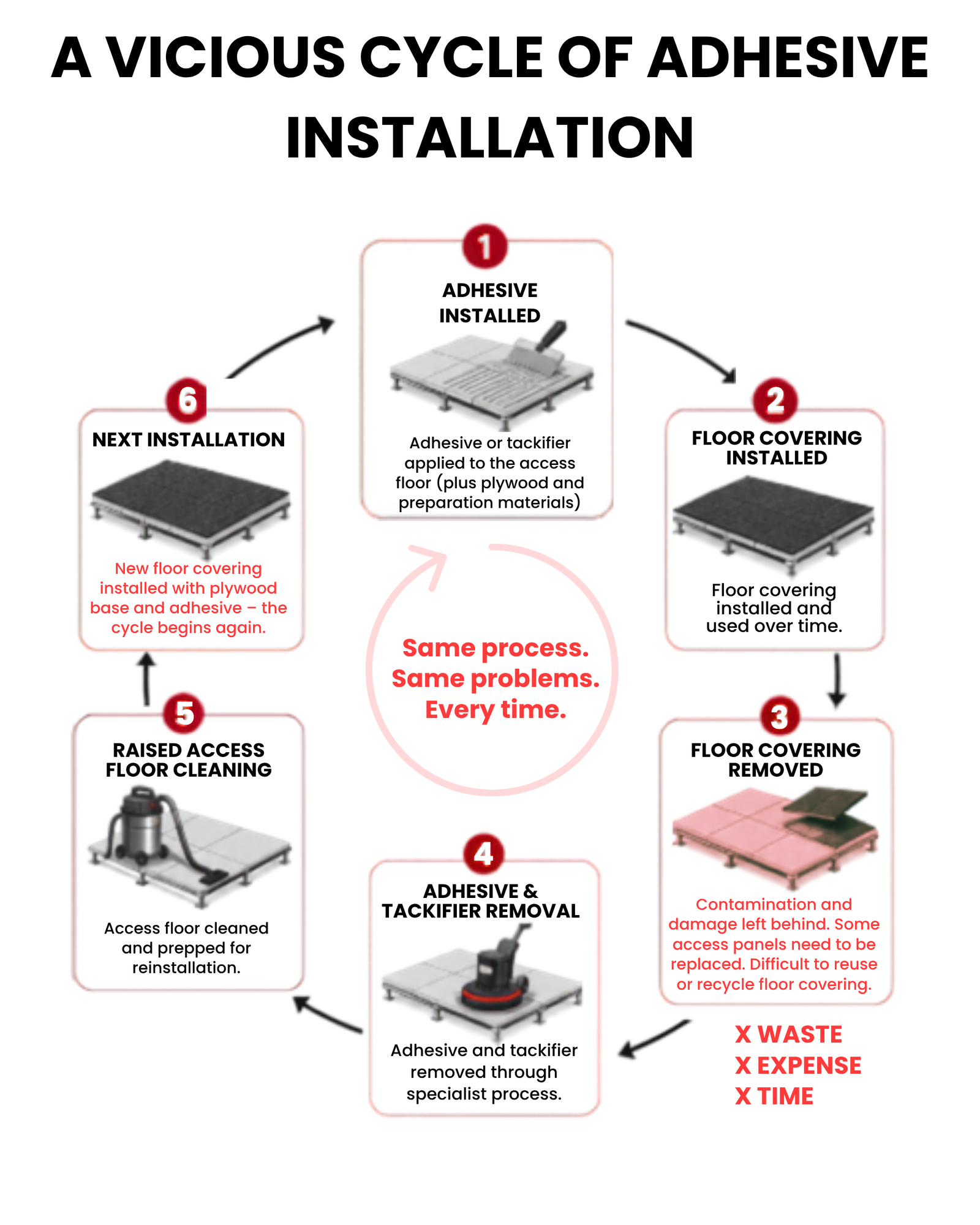
Once a raised access floor has been painstakingly cleaned, or indeed replaced, the temptation can be to install the new floor covering using the same traditional adhesive-based methods.
But this simply starts the cycle again, rendering re-use of any element impossible and resulting in another round of damage to the access floor, adhesive and tackifier removal and programme delays.
For building owners and facilities teams, this means paying repeatedly to restore an asset that could otherwise be kept clean and reusable.
For contractors, it can mean additional preparation work or replacement of the raised access floor before the next flooring installation can begin.
Adhesive-free flooring installation: breaking the cycle
Happily, there is a better way to avoid repeating this history …
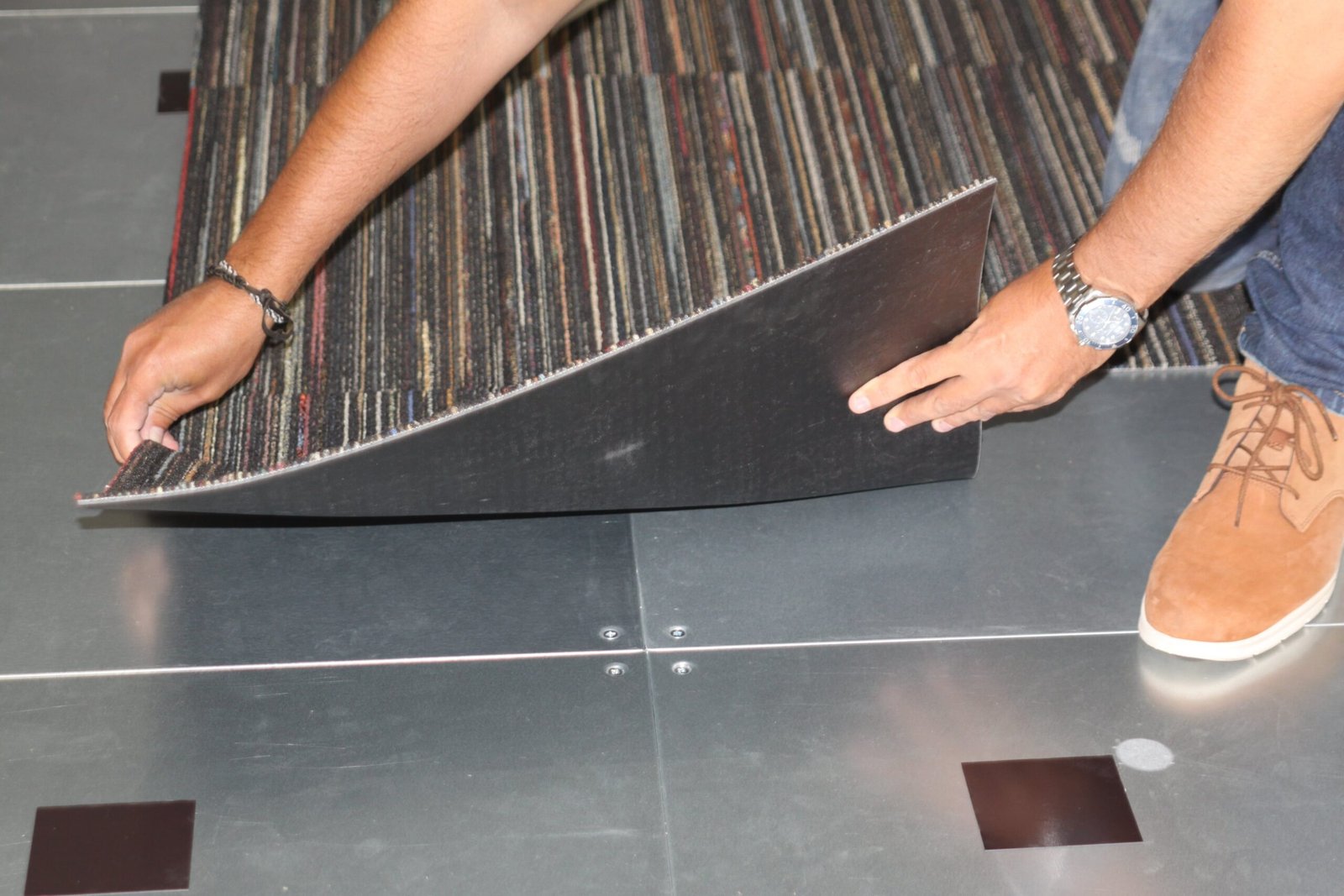
Adhesive-free flooring installation provides an alternative way to secure floor coverings without permanently bonding them to the raised access floor, and with no preparation required.
Reversible fixing systems, such as tab-based systems from Circular Building Solutions, hold floor coverings securely in place with no plywood or preparation to the raised access floor needed, whilst allowing them to be cleanly uplifted at the end of their useful life.
This makes the flooring easier to remove, replace and reuse – whilst avoiding replacement of the raised access floor and the adhesive residue and damage that creates additional work during future refurbishment.
Circular Building Solutions offer a family of reversible fixing solutions which can be used to install commercial floor coverings, including carpet tile, +4mm Luxury Vinyl Tile and Woven Vinyl Tile.
The range is used and/or approved by 16 major flooring manufacturers, including Shaw Contract, Milliken, Forbo, Desso, Tarkett and Interface, and includes award-winning IOBAC MagTabs® designed specifically for use on access flooring.
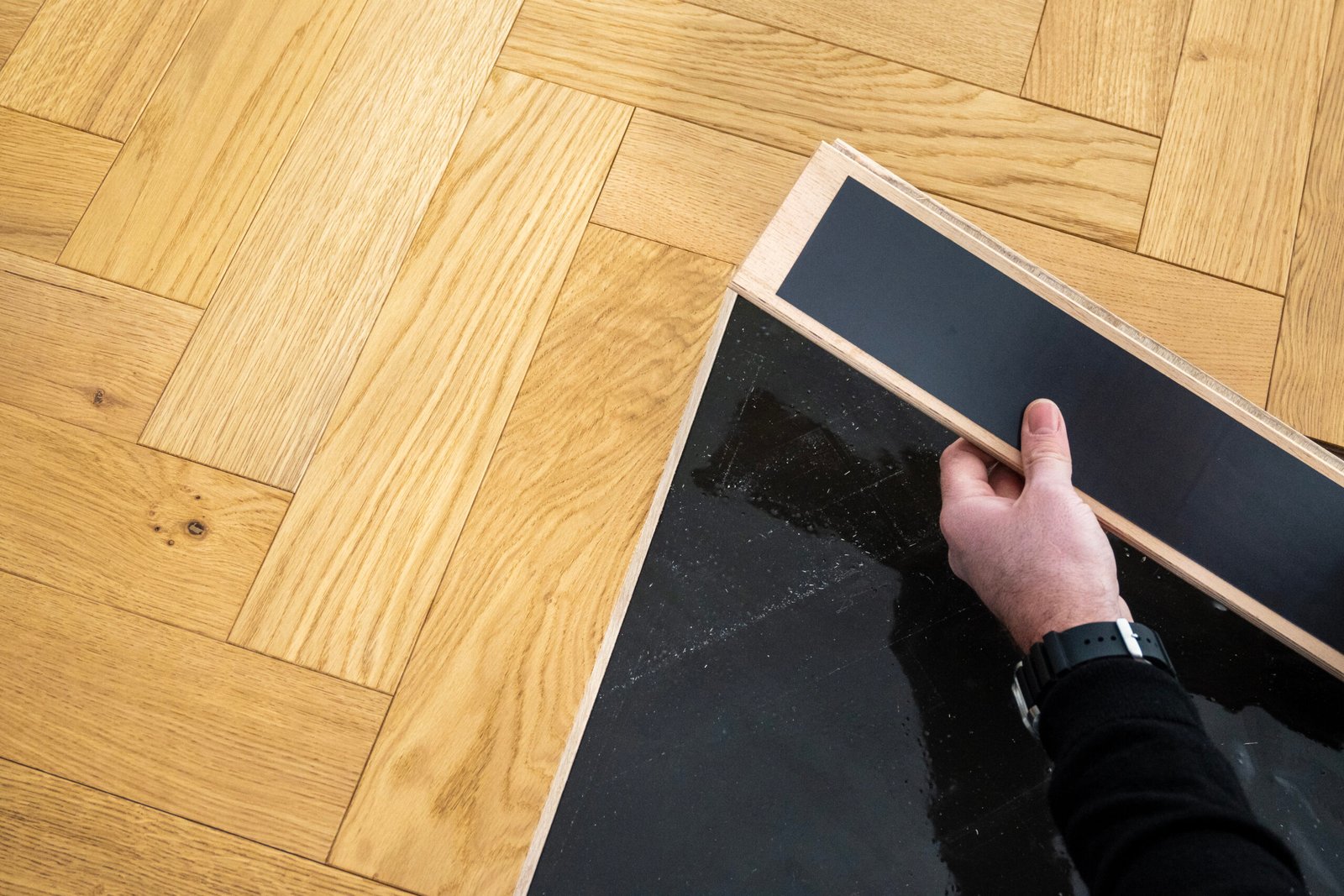
Circular Building Solutions also offers a Magnetic Wood System, which enables engineered wood flooring manufacturers to incorporate magnetic fixing technology into their products for installation on raised access floors, which is proving to be a popular option.
Again this option does not need plywood or preparation to the metal raised access floor, ensuring no damage or contamination and greater supporting re-use of all elements.
The Financial Benefits of Adhesive-free Flooring Installation
A raised access floor is a valuable building asset, with an indicative value of around £80/m², whilst floor coverings typically add another £25/m².
Against this investment, the £0.50/m² cost of adhesive or tackifier may seem insignificant. But its impact can be much greater when the floor covering is eventually removed exposing the damage beneath.
When adhesive contamination needs to be removed before the access floor can be refurbished and reused, cleaning and adhesive removal can cost an estimated £10 –£14/m² – adding cost, labour and potential delays to the next flooring installation.
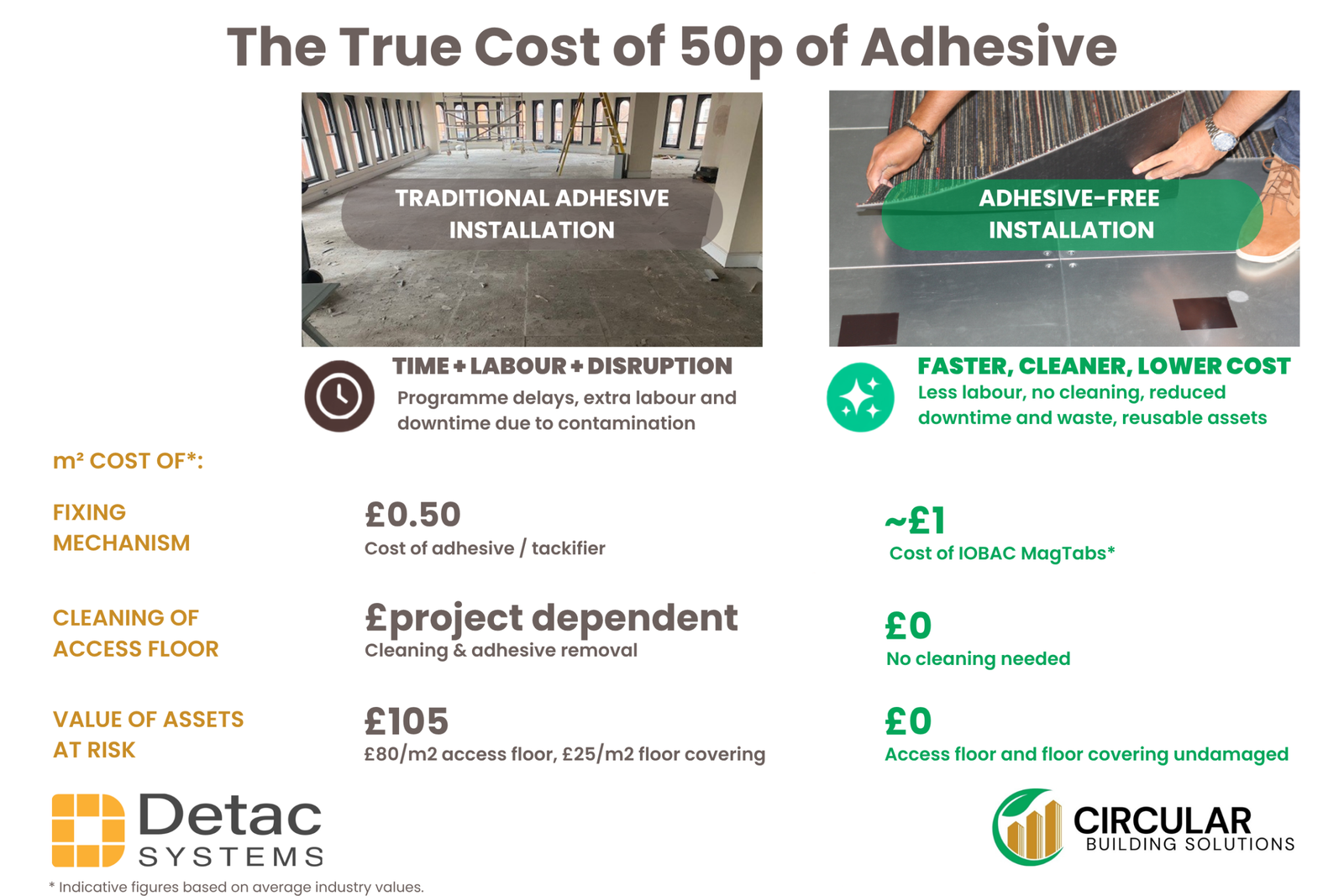
The lesson is simple: the true cost of a flooring fixing system isn’t just what it costs to install today, but what it costs to remove and replace tomorrow and how it detrimentally affects circular economy principles and the life cycle of all elements.
That’s why adhesive-free flooring installation should be considered as part of the whole-life cost of the flooring system – helping to protect the access floor asset while reducing future refurbishment costs, disruption and waste.
A cleaner approach to raised access floor refurbishment
Adhesive and tackifier removal will continue to be necessary on many refurbishment projects where traditional flooring installation methods have been used in the past.
But it doesn’t have to be repeated indefinitely.
Adhesive-free flooring installation helps keep access floors clean, accessible and ready for their next use – reducing future cleaning, refurbishment time, cost and waste.
As commercial buildings increasingly embrace design for disassembly and circularity, we need to think beyond the current installation and consider what happens next.
The next life of the floor starts with how it’s installed today. Restore it. Reuse it. Don’t contaminate it again.



Comments are closed