
Magnetic wood flooring can offer commercial cost benefits beyond the initial installation.
When installed directly onto suitable raised access floor panels, magnetic wood flooring can reduce installation time, maintain access to underfloor services and help protect the raised access floor from damage associated with permanent fixings and adhesives.
A wider financial opportunity comes when the whole-life cost of the flooring system is considered, including installation, maintenance, access, remediation, refurbishment, buy-back and reuse.
So, how does magnetic wood flooring compare with traditional wood flooring installation?
In this article, we compare the indicative costs of traditional wood flooring installation with magnetic flooring incorporating our CBS Magnetic Wood System and explore where the potential commercial savings can arise.
Or watch our video summary here 🔽
Credit: V4Magnetic®
What is Magnetic Wood Flooring?
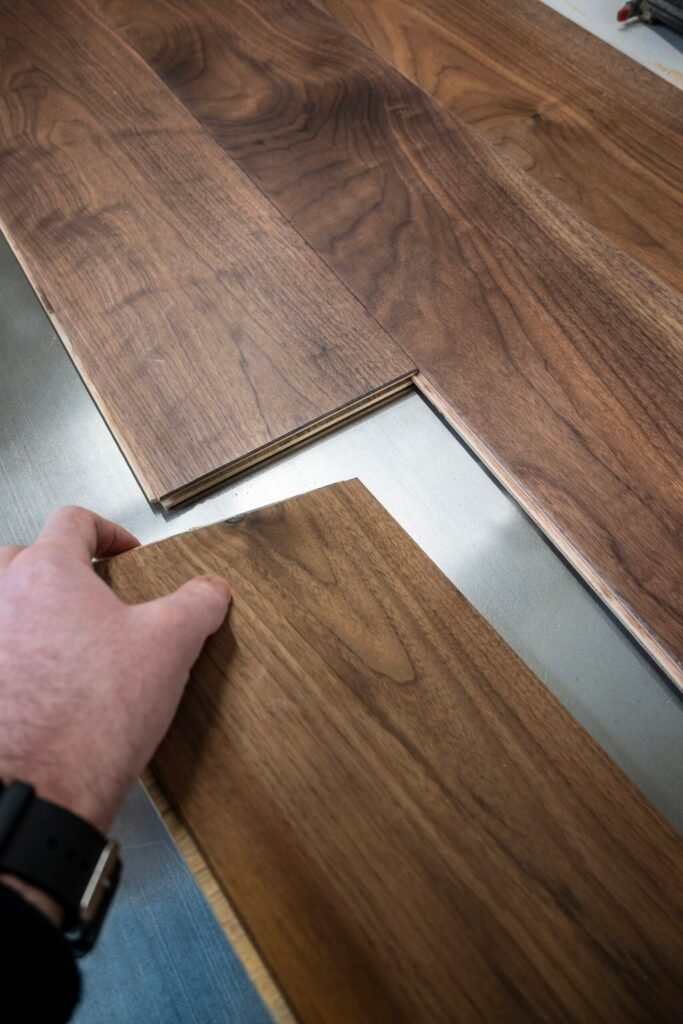
The CBS Magnetic Wood System is an open-source approach to creating magnetic wood flooring. Circular Building Solutions provides the magnetic technology and practical expertise needed to incorporate the system into engineered wood flooring products.
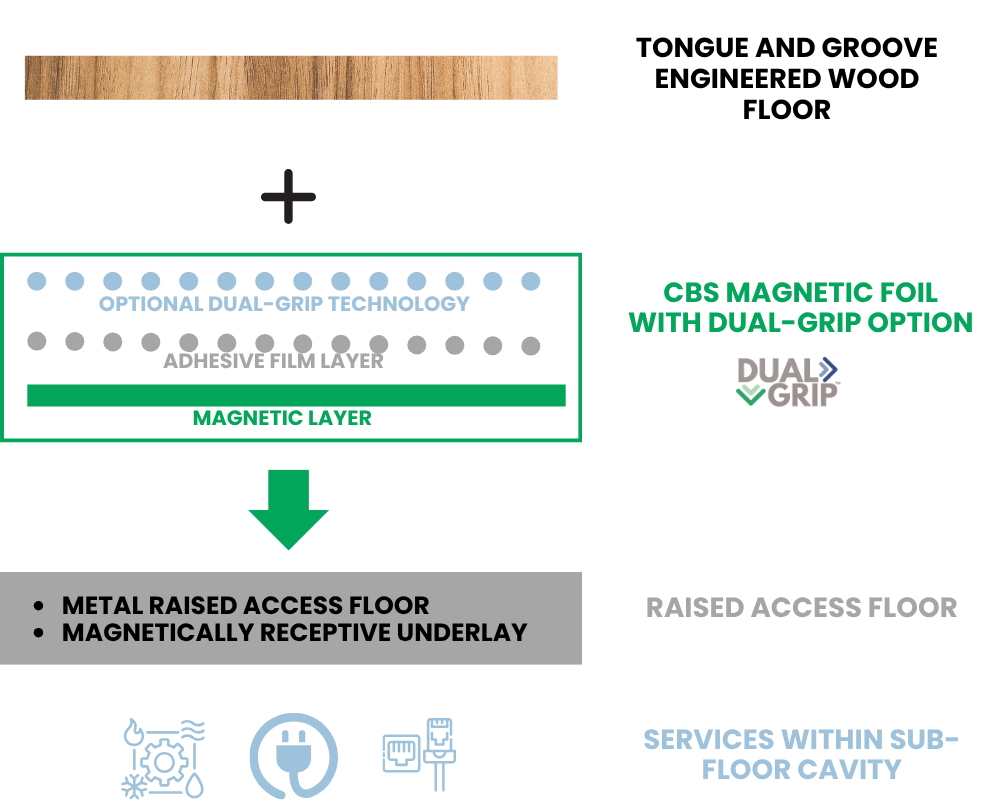
CBS Magnetic Foil is a high strength PVC-free magnetic film designed to be applied to the underside of engineered wood flooring.
It creates a secure connection between the wood flooring and a suitable magnetically receptive sub-floor, such as metal raised access flooring.
For applications where additional horizontal stability is required, the system can also incorporate patented IOBAC Dual-Grip™ Technology, which helps reduce movement and tracking.
The technology has been incorporated into magnetic wood flooring products from manufacturers including V4, Broadleaf Timber and WFA.
Traditional Wood Flooring Installation: The “Screw and Glue” Method
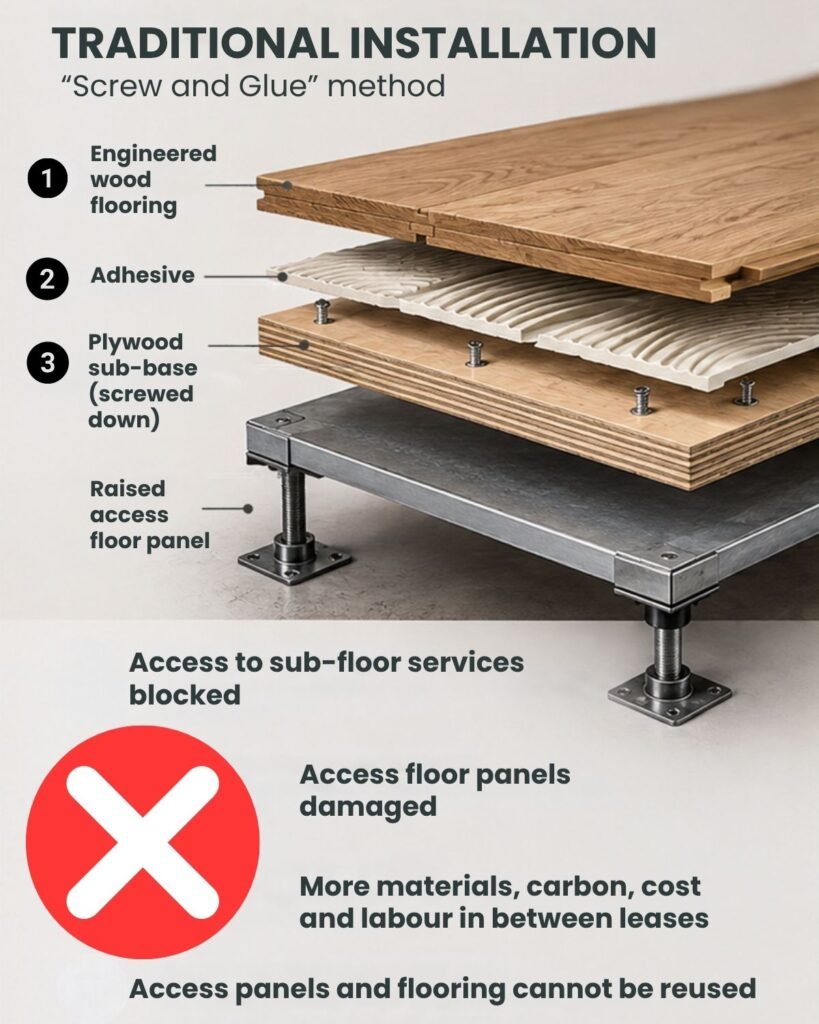
A common approach to installing engineered wood flooring onto a metal raised access floor is to first create a stable plywood base.
The typical process involves three stages:
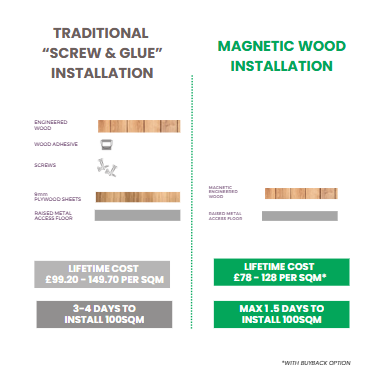
1. Position 9mm plywood sheets over the raised access floor panels.
2. Screw the plywood sheets into position.
3. Glue the engineered wood flooring to the plywood base.
This creates a stable installation, but it also introduces additional materials, labour time and issues with access and future removal.
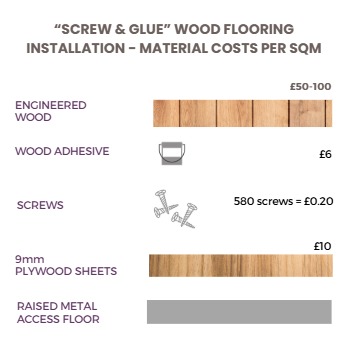
Based on cost assumptions used for this comparison, total material costs for the plywood sheets, screws, glue and engineered wood are between £66.20 and £116.20 per square metre depending on the engineered wood flooring grade used.
Labour costs are around £8.50 per square metre for fitting the plywood base and £25 per square metre for fitting the engineered wood.
This gives a total material and labour cost of £99.70 – £149.70 per square metre.
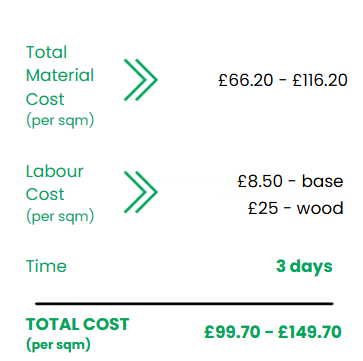
For a 100m² installation, that represents an indicative initial installation cost of approximately £9,970 – £14,970.
There is also a time implication. Based on the same example, a 100m² installation would typically take around three days.
The initial cost, however, is only part of the commercial picture.
Magnetic wood flooring costing
Magnetic wood flooring removes the need for a separate plywood sub-base when installed onto a suitable magnetically receptive raised access floor.
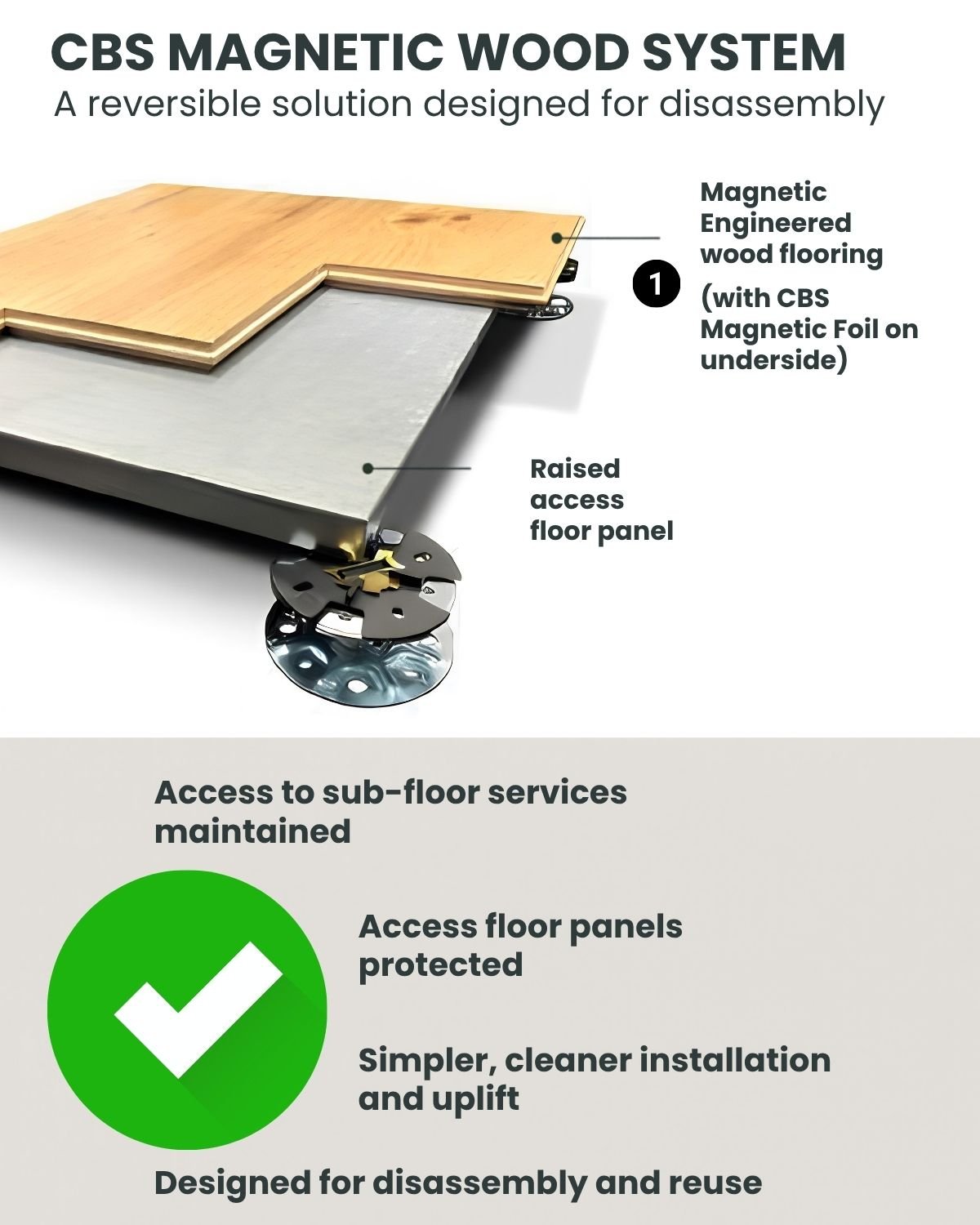
The installation is simplified to just one step, as the magnetic wood flooring is installed directly onto the raised access flooring.
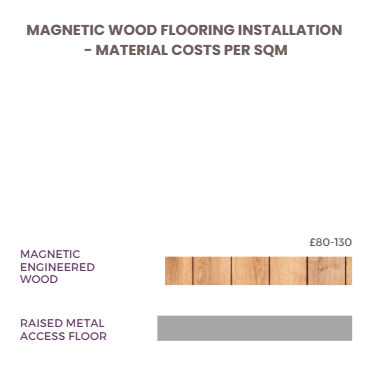
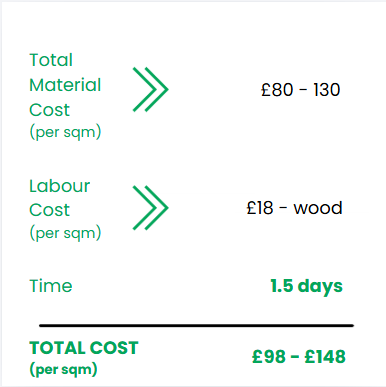
Indicative material costs for magnetic wood flooring using CBS Magnetic Wood System are around £80 to £130 per square metre, depending on the engineered wood grade being magnetised.
Labour costs for fitting magnetic wood flooring are around £18 per square metre.
Total material and labour cost is therefore between £98 and £148 per square metre, equating to approximately £9,800 – £14,800 for a 100m² installation.
Initial installation costs with magnetic wood flooring are therefore broadly comparable with the traditional approach.
An additional commercial opportunity comes from what happens around that installation.
Magnetic wood flooring can reduce installation time
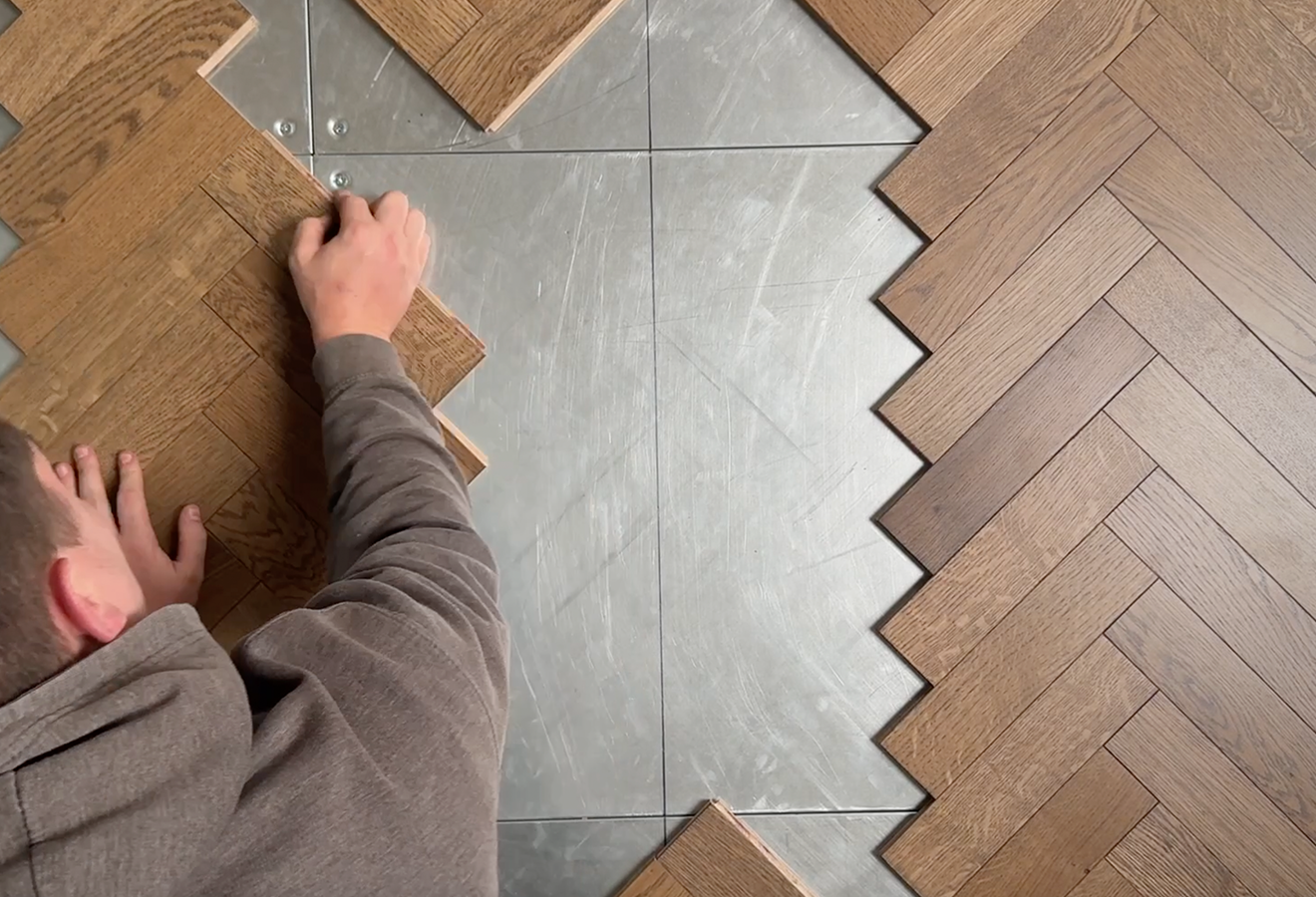
By removing the plywood base from the installation process, estimated installation time falls from approximately three days to one and a half days in the 100m² example above.
The exact time saving will depend on the project, flooring product, site conditions and installation team, but removing the plywood preparation stage significantly simplifies the installation process.
For commercial projects, reducing installation time can have benefits beyond flooring labour.
Earlier completion can reduce disruption to other trades, help maintain project programmes and reduce the time a space is unavailable for occupation.
Credit: Broadleaf Timber
The hidden cost of losing access to services beneath raised access floor panels
Credit: V4Magnetic®
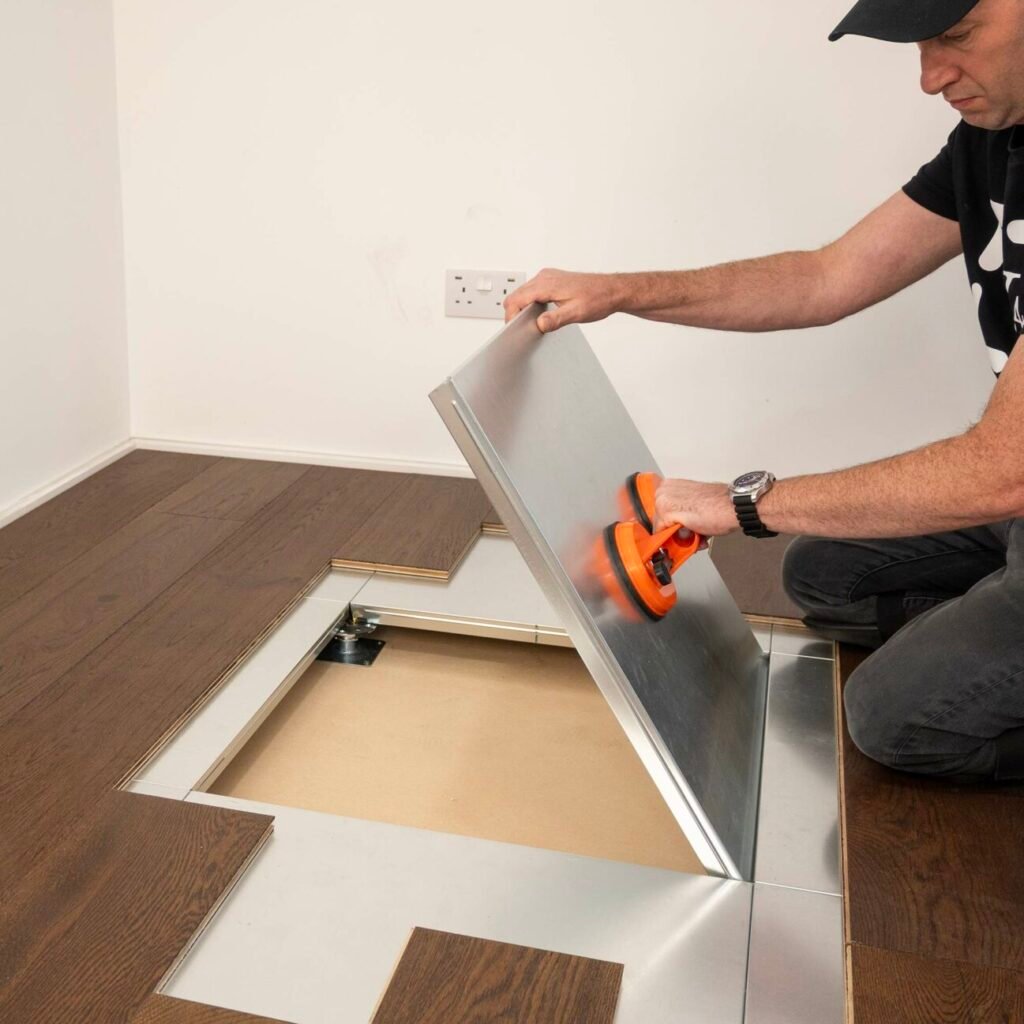
Raised access flooring is designed to provide access to services beneath the finished floor.
Once plywood is screwed to the access floor and engineered wood flooring is permanently bonded to the plywood, accessing those services becomes considerably more involved.
The finished floor may need to be damaged or partially dismantled to reach the floor void.
Magnetic wood flooring offers a different approach.
Selected planks can be designed to be removable, allowing access to services beneath the raised access floor while retaining the overall integrity of the installation.
CBS can advise on practical access solutions, including identification of critical access planks and methods for creating removable access planks on site.
This can be particularly valuable in commercial buildings where layouts, services and tenant requirements are likely to change over time.
CBS can also advise on UV identification and removable access planks to make critical access planks easier to locate and remove.
Protecting the value of raised access floor panels
The raised access floor represents a valuable building asset, both from a cost and carbon perspective.
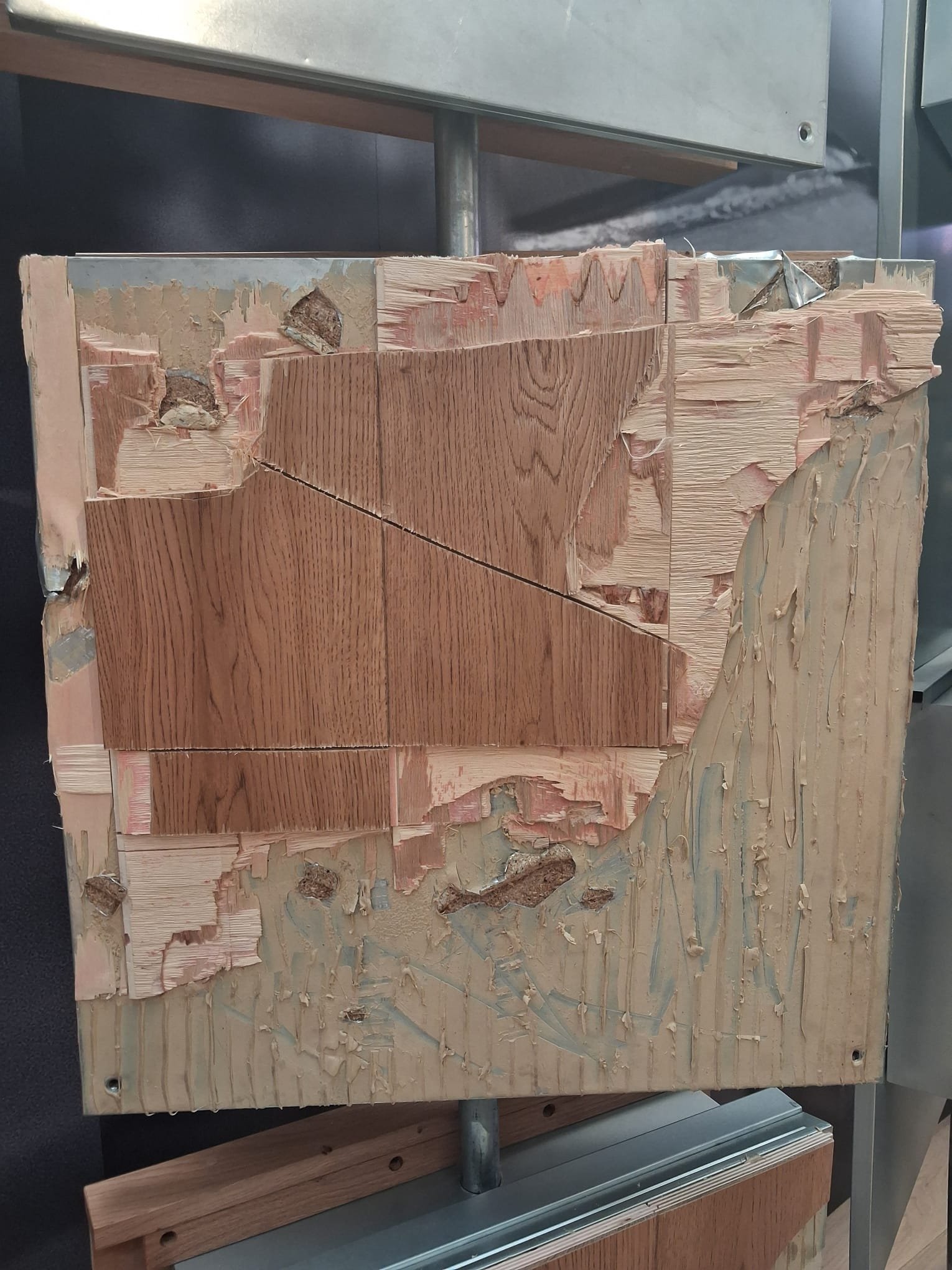
One of the less visible costs associated with traditional wood flooring installation is what happens to the raised access floor when the finished floor is removed.
Screwed plywood and adhesive can leave it damaged or contaminated.
Removing the flooring involves additional labour to clean, repair or prepare the panels for their next use, if they can be reused at all, along with potential dilapidation costs.
CBS has previously used an indicative remediation cost of approximately £10–£14 per m², depending on the condition and work required.
Credit: Broadleaf Timber
Whole-life cost: removal and reuse
Magnetic wood flooring is designed to support design for disassembly, reuse and future adaptability.
Its reversible nature means that the value of both the wood flooring and the raised access floor is retained, rather than treating them as single-use components.
Engineered wood flooring manufacturer Broadleaf Timber also offer buy-back scheme, creating a further opportunity to retain value at the end of the first installation.
Alternatively their Multi Site warranty enables a purchaser to relocate their magnetic wood flooring, offering a genuine second life solution.
The cost to replace raised access panels is around £80 per square metre, although actual replacement costs vary according to specification, grade and market conditions.
For high embodied carbon materials such as raised access panels, adding new materials rather than reusing also significantly increases embodied carbon metrics in a building.
Real-world evidence: British Land, 2 Kingdom Street
The commercial implications of protecting raised access flooring are demonstrated by British Land’s approach to fit-out.
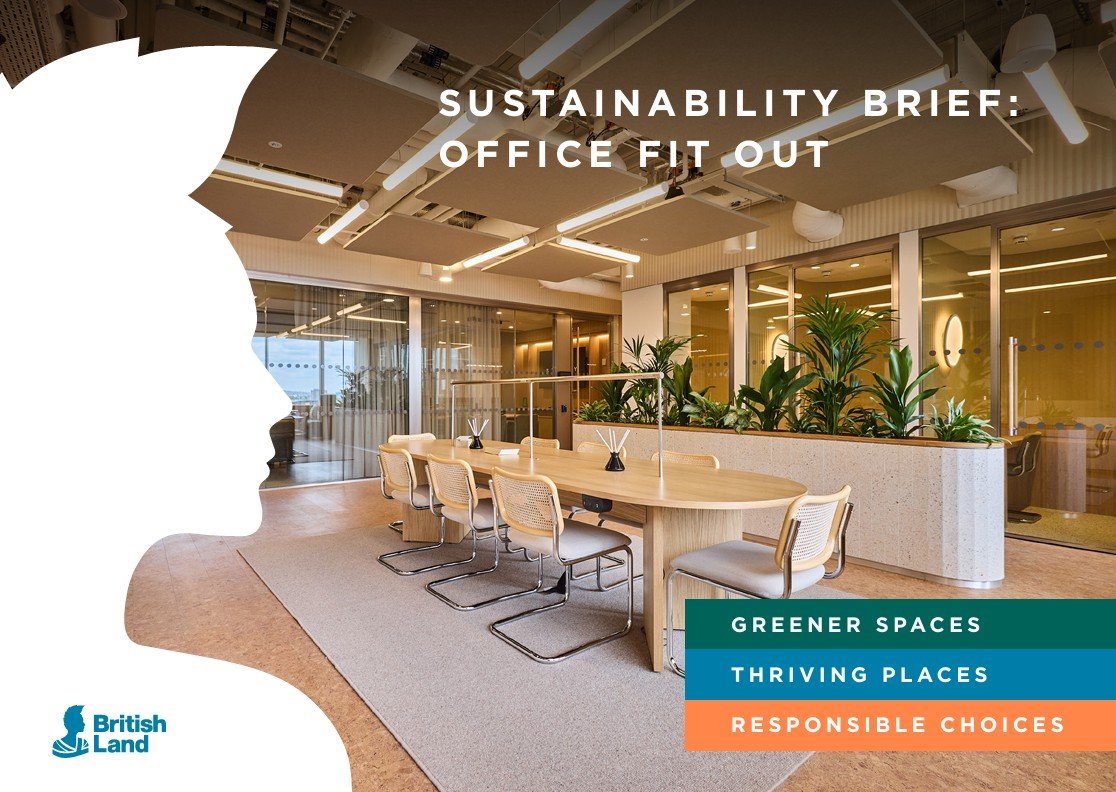
British Land’s Sustainability Brief for Office Fit-out highlights the issue of raised access flooring being discarded because of damage caused by adhered plywood.
It also discourages the use of chemical adhesives and fixings that can compromise the future reuse of flooring and access floor panels.
The Brief features the 2 Kingdom Street project as a best practice case study, where our IOBAC MagTabs were used as a clean, reversible fixing for installing carpet tile and Luxury Vinyl tile onto raised access panels.
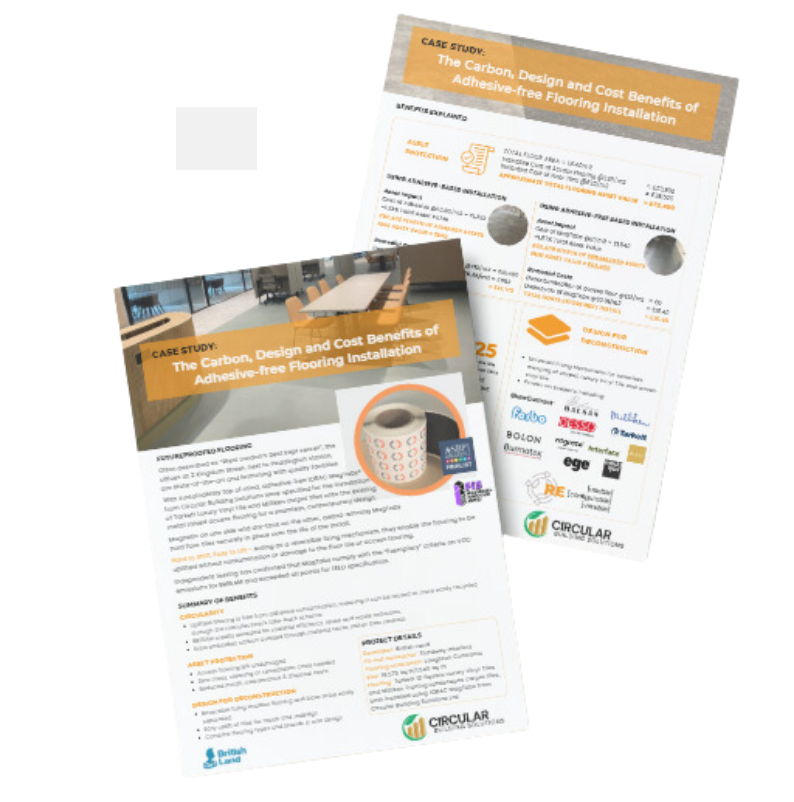
In a CBS whitepaper, we calculated that the installation method could deliver more than £19,000 in future sub-floor remediation savings and avoid approximately 6,000 kg CO₂ avoided across the 1,540 square metre project.
This demonstrates the wider commercial principle behind reversible flooring installation: protecting the raised access floor can reduce future remediation costs while supporting the reuse of an existing building asset.
CBS Magnetic Wood applies the same reversible-fixing principle to engineered wood flooring.
The commercial case for magnetic wood flooring
Magnetic wood flooring offers a different way to think about the cost of wood flooring installation.
The initial installation cost can be broadly comparable with a conventional plywood and adhesive installation.
The additional value comes from simplifying installation, maintaining access to the floor void and protecting the raised access floor for future use.
For commercial interiors, where floors may need to be adapted, replaced or refurbished several times during a building’s life, these considerations can have a significant impact on whole-life cost.
The result is a flooring system that can support both commercial efficiency and design for disassembly.





Comments are closed